
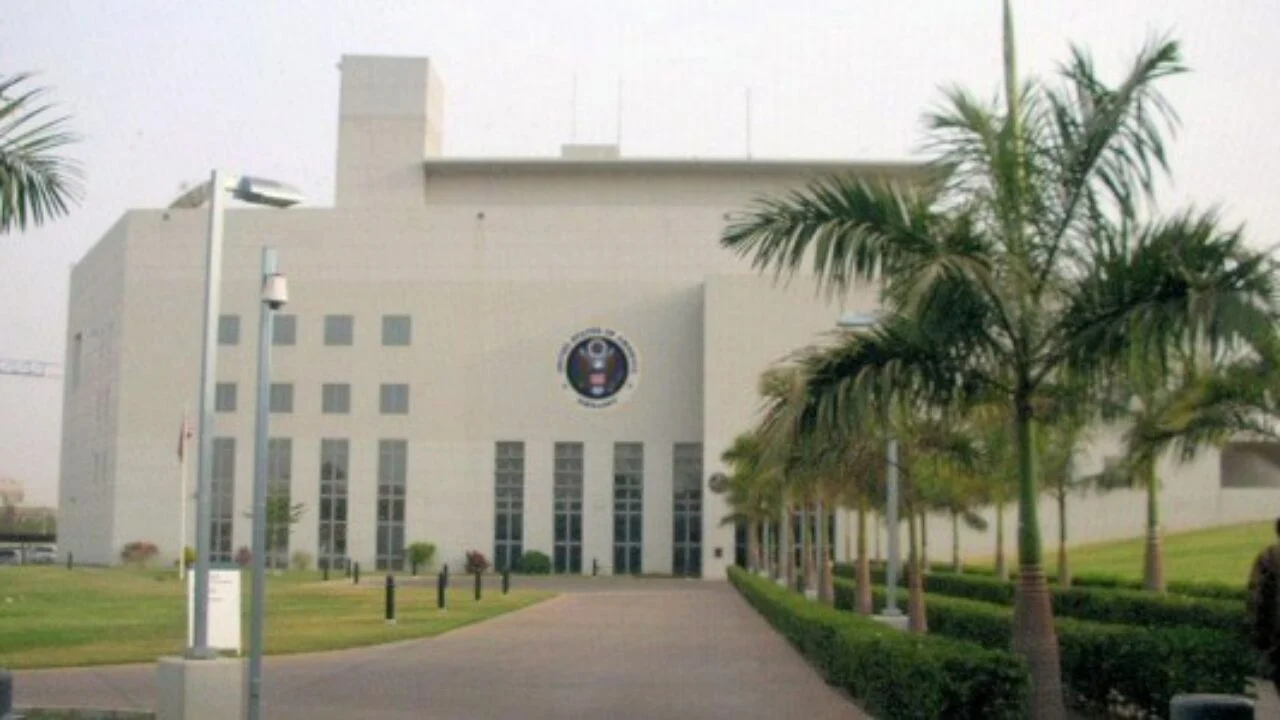
U.S. Embassy Staff Leave Abuja Nigeria Over Security Concerns
The United States has ordered non-emergency embassy personnel and their families to leave Nigeria’s capital as security conditions worsen, with officials citing crime, terrorism, and civil unrest. The directive comes amid heightened risks across multiple states, reinforcing the U.S. Department of State’s travel warnings for the country. This latest development ensures that U.S. embassy staff leave Abuja Nigeria safely and without delay.
On April 8, 2026, the U.S. Department of State issued a formal travel advisory recommending that non-essential employees and their family members at the U.S. Embassy in Abuja depart immediately. The advisory highlights specific threats, including armed robbery, kidnapping, civil unrest, and terrorist activity, and it classifies certain regions under Level 4, indicating that Americans should avoid travel there entirely.
“Reconsider travel to Nigeria due to crime, terrorism, unrest, kidnapping, and inconsistent availability of health care services. Some areas have increased risk,” the statement read. “On April 8, 2026, the Department of State authorized non-emergency U.S. government employees and their families to leave U.S. Embassy Abuja due to the deteriorating security situation.”
The advisory details that violent crime remains widespread in Nigeria, affecting both urban and rural areas. Incidents of armed robbery, assault, carjacking, and hostage-taking are frequent. In particular, kidnapping for ransom continues to target foreigners and dual nationals. Terrorist organizations such as Boko Haram and other extremist groups are reported to operate in coordination with criminal gangs, posing additional threats to public safety.
Several states across northern, central, and southern Nigeria have been designated high-risk areas. These locations include parts of the Niger Delta and the Southeast, where civil unrest persists due to armed groups and ongoing protests. Public spaces such as schools, markets, transport hubs, government buildings, and places of worship are considered potential targets.
The travel advisory also flagged healthcare challenges, noting limited access to medicines, unreliable emergency services, and upfront payment requirements in some facilities. The U.S. government stressed that it may have limited capacity to assist citizens in certain high-risk areas, urging all Americans to remain vigilant and avoid travel to these locations.
This move mirrors a prior action in December 2025, when Nigeria was included on a list of countries subject to partial travel restrictions under a U.S. presidential proclamation. That decision was informed by security assessments and visa compliance data, particularly the presence of extremist groups and visa overstay patterns. Nigerian nationals reportedly had a 5.56% overstay rate for B-1/B-2 visas and 11.90% for student and exchange visas. The restrictions cover visa types including B-1, B-2, F, M, and J, while diplomats and existing visa holders remain exempt.
Travelers and expatriates are advised to follow local news, maintain communication with U.S. authorities, and exercise extreme caution if remaining in Nigeria. The Department of State emphasized that voluntary relocation for U.S. citizens in high-risk areas is strongly encouraged, and that individuals should follow emergency procedures in case of incidents.
In summary, the order for U.S. embassy staff to leave Abuja Nigeria reflects the ongoing security challenges facing the country. The decision underscores both criminal and political instability across multiple regions, emphasizing the priority placed on the safety and wellbeing of U.S. citizens abroad.
Source: U.S. Department of State Travel Advisory