
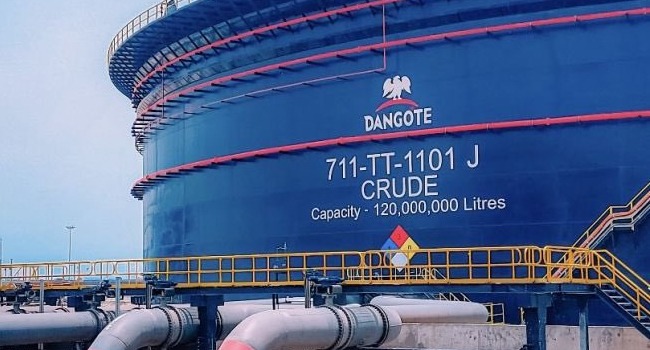
NNPC Increases Dangote Refinery Crude Supply To 10 Cargoes
NNPC Increases Dangote Refinery Crude Supply To 10 Cargoes as efforts to boost domestic fuel production and improve energy security in Nigeria continue to gain momentum. The development marks a significant step in strengthening the operational capacity of the Dangote Petroleum Refinery, although supply levels still fall short of optimal requirements.
According to recent disclosures, crude oil deliveries from the Nigerian National Petroleum Company (NNPC) Limited to the Dangote refinery doubled in March, reaching a total of 10 cargoes. This increase is seen as a positive move toward ensuring consistent feedstock supply for the refinery, which plays a critical role in Nigeria’s quest for self-sufficiency in refined petroleum products.
Speaking on the development, President and Chief Executive of Dangote Industries Limited, Aliko Dangote, confirmed that the refinery received six cargoes priced in naira and four in dollars within the month. He commended the NNPC for the improved supply arrangement, noting that it reflects growing collaboration between the national oil company and private sector players in the energy industry.
Despite the progress highlighted in NNPC Increases Dangote Refinery Crude Supply To 10 Cargoes, Dangote pointed out that the current supply remains below the 19 cargoes required monthly for the refinery to operate at full capacity. As a result, the refinery continues to rely on crude imports from the United States and other African countries to bridge the supply gap.
The shortfall underscores ongoing challenges in Nigeria’s upstream oil sector, particularly regarding the availability of crude oil for domestic refining. Dangote expressed concern that international oil companies operating in Nigeria often prefer selling crude to international traders rather than directly to local refineries. This practice forces the Dangote refinery to repurchase crude at higher prices, increasing operational costs and potentially impacting fuel prices in the domestic market.
The issue of crude supply is central to the broader implications of NNPC Increases Dangote Refinery Crude Supply To 10 Cargoes, as Nigeria seeks to reduce its dependence on imported petroleum products. By ensuring a steady and adequate supply of crude oil to local refineries, the country can improve fuel availability, stabilize prices, and strengthen its energy security framework.
Dangote also emphasized the need for increased access to domestically priced crude under local currency arrangements. Such measures, he argued, would help reduce foreign exchange pressures and contribute to long-term economic stability. By promoting transactions in naira, Nigeria could also shield its energy sector from global currency fluctuations and enhance affordability for consumers.
During a recent visit to the refinery complex in Ibeju-Lekki, Lagos, Deputy Secretary-General of the United Nations, Amina Mohammed, highlighted the broader economic significance of Dangote Industries’ operations. She described the company’s integrated industrial model as a key contributor to addressing Africa’s food security challenges, particularly through its fertilizer production capabilities.
Mohammed noted that the United Nations is keen on supporting scalable solutions that can mitigate food insecurity across the continent. She emphasized the importance of partnerships between governments, private sector players, and international organizations in achieving sustainable development goals. Her remarks reinforce the wider impact of industrial projects like the Dangote refinery beyond the energy sector.
In addition to refining operations, Dangote Industries has been actively expanding its export activities. The company has increased shipments of urea fertilizer and Premium Motor Spirit (PMS) to various African countries facing supply disruptions. These efforts aim to support agricultural productivity and stabilize fuel supply across regions affected by global economic pressures and geopolitical tensions.
Dangote revealed that the refinery has already shipped approximately 17 cargoes of petrol to African markets, leveraging its massive 650,000 barrels per day capacity. This capacity positions the refinery as a strategic asset not only for Nigeria but also for West, Central, and East Africa.
The significance of NNPC Increases Dangote Refinery Crude Supply To 10 Cargoes extends beyond immediate supply improvements. It represents a step toward strengthening local refining capabilities, reducing reliance on imports, and positioning Nigeria as a key player in regional energy markets. However, achieving these goals will require sustained collaboration, policy support, and increased investment in upstream production.
As Nigeria continues to navigate global economic challenges and fluctuating oil markets, the ability to maintain consistent crude supply to domestic refineries will remain crucial. Stakeholders agree that bridging the supply gap and addressing structural inefficiencies in the oil sector will be essential for unlocking the full potential of the Dangote refinery.
Ultimately, while the increase in crude supply marks encouraging progress, it also highlights the work that still needs to be done. With the right policies and continued cooperation between the NNPC and private investors, Nigeria can move closer to achieving energy independence and long-term economic resilience.