US–Israel Attack on Iran Explained
The US-Israel attack on Iran has escalated tensions in the Middle East after a large-scale joint military operation triggered widespread retaliation from Tehran and raised fears of a regional war.
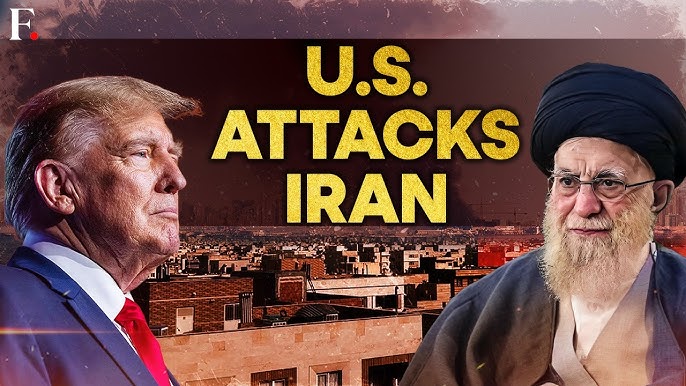
The United States and Israel launched coordinated strikes across Iran targeting military installations, missile infrastructure, and senior leadership positions. U.S. President Donald Trump said the operation aimed to dismantle Iran’s missile program and eliminate threats linked to the country’s nuclear ambitions.
According to Israeli sources, Iran’s Supreme Leader Ali Khamenei was killed during the strikes, although official confirmation from Iranian authorities remains unclear. Explosions were reported in several Iranian cities, including Tehran, where key government and military facilities were targeted.
The US-Israel attack on Iran follows months of heightened tensions. Iran had been facing economic pressure and domestic unrest, while negotiations over its nuclear program had recently resumed. Although talks reportedly showed progress, Washington maintained that Iran had failed to abandon its nuclear ambitions.
Trump said the strikes were conducted to protect American interests and prevent Iran from developing nuclear weapons. He also claimed Iran was working on long-range missiles capable of reaching the United States, although previous intelligence assessments suggested such capabilities were still years away.
Israeli Prime Minister Benjamin Netanyahu has long viewed Iran as Israel’s primary security threat. Israel previously targeted Iranian-backed groups across the region and has repeatedly warned against Iran acquiring nuclear weapons. The latest offensive reflects Israel’s strategy of weakening Iranian military capabilities and limiting regional influence.
Both Trump and Netanyahu suggested that the US-Israel attack on Iran could create conditions for political change within the country. Trump addressed Iranian citizens directly, urging them to take control of their government, while Netanyahu encouraged Iranians to pursue a “free and peaceful” future.
The strikes reportedly caused significant casualties, with Iranian state media reporting more than 200 deaths and hundreds of injuries. One of the deadliest incidents involved a strike on a girls’ school in southern Iran, where dozens were killed.
Iran responded with a large-scale retaliation targeting U.S. and allied facilities across the region. Missile and drone attacks were reported in several countries hosting American forces, including the United Arab Emirates, Qatar, Jordan, Bahrain, and Saudi Arabia.
Iranian Foreign Minister Abbas Araghchi condemned the operation as an illegal act of aggression and defended Iran’s retaliation as legitimate self-defense. Iranian officials insisted that the country did not seek war but would respond to any attacks.
The fighting has disrupted shipping traffic in the Strait of Hormuz, a vital global oil route, raising concerns about economic consequences beyond the Middle East.
The US-Israel attack on Iran marks one of the most serious confrontations between the countries in decades. With additional strikes expected and retaliatory attacks continuing, the situation remains highly volatile and could expand into a wider regional conflict.
Source:
Adapted from CNN
(https://www.cnn.com)